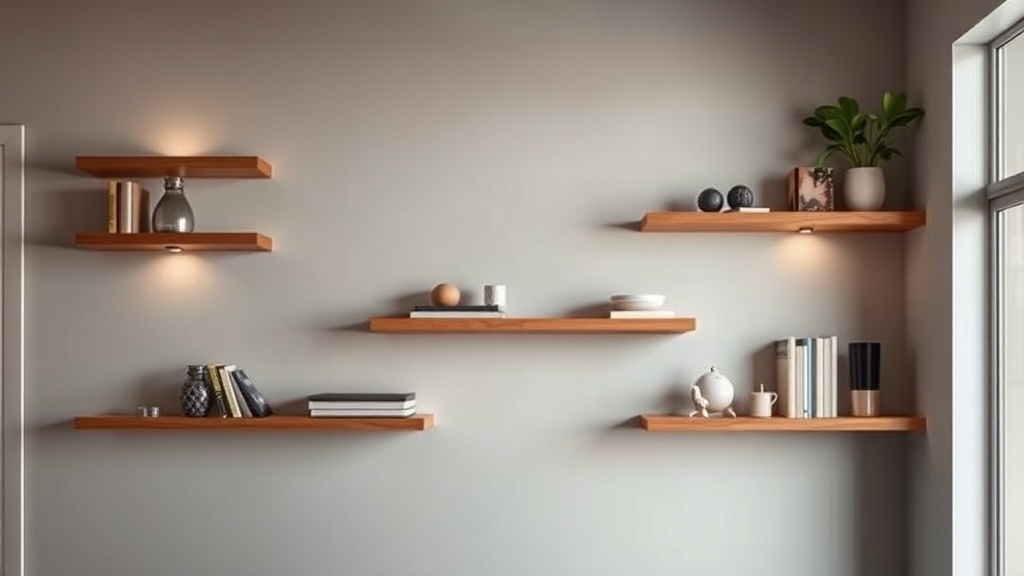
Turning Blank Walls into Functional Art with Floating Shelves

A single, empty wooden plank suspended against a white-washed wall holds a small ceramic pitcher, a single trailing pothos, and three weathered books. It looks weightless. This guide explores how to use floating shelves to reclaim vertical space, add character to cramped rooms, and turn your walls from dead zones into functional displays. In a small home or a tiny house, every square inch of wall space is a potential asset.
When you live in a compact space, floor area is precious. You can't just add a bulky bookshelf or a wide console table without making the room feel claustrophobic. Floating shelves solve this by moving the storage upward—away from your feet and toward the ceiling. It's a way to keep your surfaces clear while still keeping your favorite things within reach.
What Are the Best Types of Floating Shelves for Small Spaces?
The best floating shelves for small spaces are lightweight, durable, and designed with minimal hardware to maintain a clean aesthetic. You have a few distinct directions you can take depending on your style and the weight of what you intend to display.
- Solid Wood Shelves: These offer a high-end, organic look. If you're using something heavy like a stack of cookbooks, a thick piece of reclaimed oak provides the necessary structural integrity.
- Metal Industrial Shelves: Great for a modern or minimalist vibe. They are often thinner, which helps keep the visual "noise" low in a tiny room.
- Acrylic/Lucite Shelves: These are nearly invisible. They work wonders when you want to display items without making the wall feel cluttered.
- Wire Shelving: Often used in kitchens or bathrooms, these allow light to pass through, preventing the "heavy" feeling that solid shelves can create.
I’ve found that wood is usually the winner for most of us. It adds warmth. In a tiny home, things can sometimes feel a bit sterile or "boxy"—a piece of natural grain can soften the edges of the room. If you want to see how to maximize other areas of your home, check out my post on 7 vertical storage hacks.
Don't just grab any shelf from a big-box store. Check the weight rating. A shelf might look sturdy, but if it's hollow MDF, it won't hold much more than a single candle. If you're planning on displaying heavy ceramics, you'll need something substantial.
How Much Do Floating Shelves Cost to Install?
The cost of installing floating shelves typically ranges from $20 for basic DIY kits to over $200 for high-end, solid wood custom pieces. Your total expense depends heavily on whether you are buying pre-made brackets or building them yourself from scratch.
Here is a breakdown of what to expect for different tiers of shelving:
| Shelf Type | Estimated Cost (Per Shelf) | Best Use Case |
|---|---|---|
| Basic MDF/Particle Board | $15 - $30 | Light decor, small plants |
| Solid Wood (Pine/Oak) | $40 - $80 | Books, kitchenware, heavy items |
| Custom/Designer Acrylic | $100 - $250 | Minimalist art displays |
| Metal/Industrial | $30 - $60 | Small kitchen pantry items |
Remember, the "hidden" cost is often the hardware. You can't just use a standard nail. You need high-quality anchors. If you're mounting into drywall, look for toggle bolts or heavy-duty anchors to ensure your shelf doesn't end up on the floor in the middle of the night. It’s a mistake I've seen too many people make—skimping on the mounting-to-wall connection.
How Do You Style Floating Shelves Without Looking Cluttered?
To style shelves without looking cluttered, follow the rule of varying heights and leaving plenty of "white space" (empty area) between objects. In a tiny home, a cluttered shelf is a cluttered mind. You want to create a curated look, not a storage bin that happens to be vertical.
Start with a "hero" object. This might be a large plant or a piece of art. Once you have your anchor, build around it. I like to use the "Rule of Three"—grouping objects in sets of three creates a natural visual balance that feels intentional rather than random.
Pro-tips for styling:
- Layer your items: Don't just line things up in a row. Place a small plate in front of a larger book. It adds depth.
- Mix textures: Pair a smooth ceramic vase with a rough, woven basket. The contrast makes the shelf look professional.
- Incorporate greenery: A trailing plant like a Pothos or a Philodendron adds movement. It makes the shelf feel "alive."
- Keep a color palette: If your shelves are a mix of colors, the room will feel smaller. Stick to 2-3 main tones.
If you’re working with a very tight space, like a kitchen nook, focus on utility. A shelf doesn't just have to be pretty; it can hold your coffee mugs or spice jars. This is where function meets form. For more ideas on making small spaces work, see my piece on making small entryways work harder.
One thing to keep in mind is the height. Don't place shelves too high where they become unreachable, but don't place them so low that they feel like they're encroaching on your headspace. The "sweet spot" is usually at eye level or slightly above.
If you're using these for a kitchen, I highly recommend looking at the durability of the finish. Spills happen. If you use a wooden shelf in a cooking area, a clear polyurethane seal is a good idea to prevent stains from oils or water. It's a small step that saves a lot of headaches later.
When you're measuring, always account for the thickness of the shelf itself. A 2-inch thick shelf looks much more substantial than a 1/2-inch shelf, but it also takes up more visual volume. It's a trade-off between looking "expensive" and looking "heavy."
I've seen people try to hang heavy books on thin, cheap-looking shelves, and it's a disaster waiting to happen. If you're going to do it, do it right. Use a level. A crooked shelf is a dead giveaway of a rushed job. Even a slight tilt can make a room feel "off" and disorganized.
The beauty of a floating shelf is that it's a blank canvas. You can change the way your room looks just by swapping out a few items. One month it's a collection of vintage cameras; the next, it's a minimalist display of white ceramics. That flexibility is what makes them a staple in small-scale living.