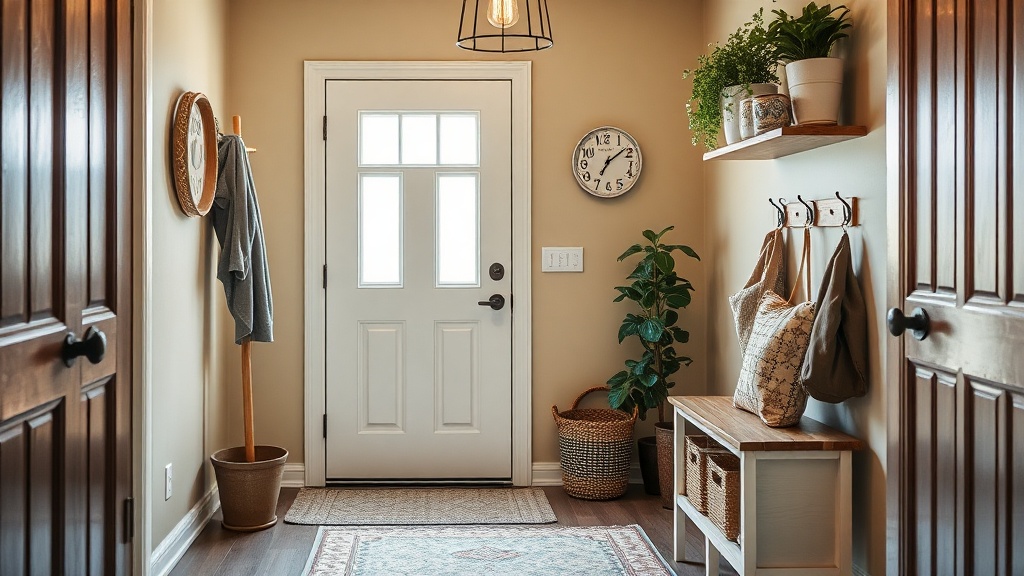
Making Small Entryways Work Harder with Smart Organization

Why Your Tiny Entryway is More Than Just a Doorway
Most people think an entryway is just a transition point—a place to drop your keys before disappearing into the living area. In a tiny home or a compact apartment, that mindset is a mistake. If you treat your entry as a secondary zone, it will quickly become a pile of clutter that eats into your precious square footage. An organized entryway acts as a buffer, preventing the chaos of the outside world from leaking into your living space. It’s about setting a boundary between the street and your sanctuary.
A cluttered entryway isn't just an eyesore; it’s a functional failure. When you have to hunt for your keys or trip over a stray boot every time you leave the house, your daily rhythm breaks. By treating this small zone with the same intention as your kitchen or bedroom, you reclaim control over your environment. We’re looking at how to build a system that handles the small stuff so you can focus on the big stuff.
Can a Small Entryway Handle Full-Sized Functionality?
The short-scale mindset often suggests that small spaces can't handle heavy-duty-use items like heavy coats, large bags, or bulky footwear. This is a myth. You don't need a massive mudroom to manage the transition from outdoors to indoors. You just need a system that prioritizes verticality and multi-use surfaces.
Instead of looking for floor space, look at the walls. A single narrow ledge can hold your keys, mail, and sunglasses without taking up a single inch of walking room. Consider these elements for a functional setup:
- Wall-Mounted Hooks: Forget the traditional coat rack that stands on the floor. Use heavy-duty hooks that sit flush against the wall.
- Slim-Profile Shoe Racks: Look for designs that are only a few inches deep. Even a small basket tucked under a bench can hold seasonal footwear.
- Floating Shelves: A single wooden shelf can serve as a landing pad for your wallet and phone.
When you're designing these spaces, remember that depth is your biggest enemy. A deep cabinet in a narrow hallway is a waste of space because it creates a bottleneck. Stick to slim profiles that keep the walkway clear. For more ideas on how to measure your space accurately, check out the