Building a Multi-Functional Coffee Station in a Tiny Kitchen

This guide explains how to design, build, and organize a multi-functional coffee station specifically tailored for the limited square footage of a tiny home kitchen. You'll learn how to integrate small appliances, manage electrical requirements, and use vertical space to keep your countertops clear.
What is the best way to organize a coffee station in a small space?
The best way to organize a coffee station in a small space is by using a tiered vertical system that combines height with specialized storage. Instead of spreading your beans, cups, and machine across the entire counter, you need to group them into a dedicated zone. This prevents the "clutter creep" that often happens in tiny kitchens when a single appliance takes over the only available workspace.
Start by choosing a dedicated corner or a specific section of your countertop. If you have a tiny kitchen, you can't afford to have a coffee machine sitting in the middle of your prep area. You need a defined boundary. A small tray or a specific mat can act as a visual anchor for the station.
I've found that a small wooden riser or a two-tiered shelf works wonders. It allows you to keep the machine on the bottom level and your syrups or coffee pods on the top level. This uses the air above the machine—space that usually goes to waste. It's a simple way to keep things organized without needing a massive footprint.
Think about your daily routine. Do you use a heavy-duty espresso machine or a simple pour-over setup? Your organization strategy should match your gear. A Breville espresso machine requires more clearance for water tanks and steam wands than a simple French press, so plan your vertical clearance accordingly.
If you're struggling with counter space, don't forget to look up. You can use ways to reclaim floor space using only your walls to hang mugs or store coffee beans on magnetic rails. This keeps the heavy lifting off your limited countertop.
How much space do I need for a tiny coffee station?
A functional tiny home coffee station typically requires a footprint of 12 to 18 inches of counter width and at least 15 inches of depth. This assumes you are using a compact machine and a small tray to hold your accessories.
The reality is that "compact" is a relative term. A standard Keurig might only take up 10 inches, but a full-sized espresso machine might require more room for heat dissipation. You don't want your machine sitting right against a wooden cabinet wall where it could cause heat damage over time. Check the manufacturer's manual for heat clearance requirements—it's a small detail that matters.
Here is a breakdown of common setups to help you visualize the footprint:
| Station Type | Width Needed | Depth Needed | Best For |
|---|---|---|---|
| Minimalist (Pour-over) | 8-10 inches | 6-8 inches | Single users, ultra-small kitchens |
| Standard (Pod Machine) | 12-14 inches | 12 inches | Speed and convenience |
| Barista (Espresso) | 18-24 inches | 15-18 inches | Coffee enthusiasts and heavy users |
If you find your counter is too small for any of these, you might need to move the station to a different surface. A small rolling cart or a dedicated side table can serve as a mobile coffee station that you can tuck away when not in use. This is a great way to keep the kitchen feeling open.
Managing Power and Electrical Needs
One thing people often forget is the power draw. A coffee machine is a high-wattage appliance. If you're running a high-end machine alongside a toaster or a microwave on the same circuit, you're going to trip a breaker. This is a common headache in tiny homes where the electrical load is tightly managed.
If you're building a custom station, consider installing a dedicated outlet or using a high-quality power strip with a surge protector. It’s worth noting that many small coffee makers have high-wattage heating elements that can pull significant power during the brewing cycle. Don't rely on a cheap, flimsy extension cord—it's a fire hazard (and a bad idea in a small space).
How can I maximize vertical space for coffee accessories?
You can maximize vertical space by using wall-mounted rails, tiered shelving, and hanging storage solutions. This moves the clutter away from the workspace and onto the walls, which are often underutilized in tiny kitchens.
The goal is to keep the "work zone" clear. If you're making coffee, you need space to move your hands and set down your mug. If every inch of the counter is covered in jars and spoons, you'll end up frustrated. Use the vertical plane to your advantage.
Here are some specific ideas for vertical storage:
- Magnetic Strips: Great for holding metal spoons or even small metal-capped spice tins.
- Pegboards: A classic for a reason. You can hang your frothing pitchers, scoops, and even small baskets for coffee bags.
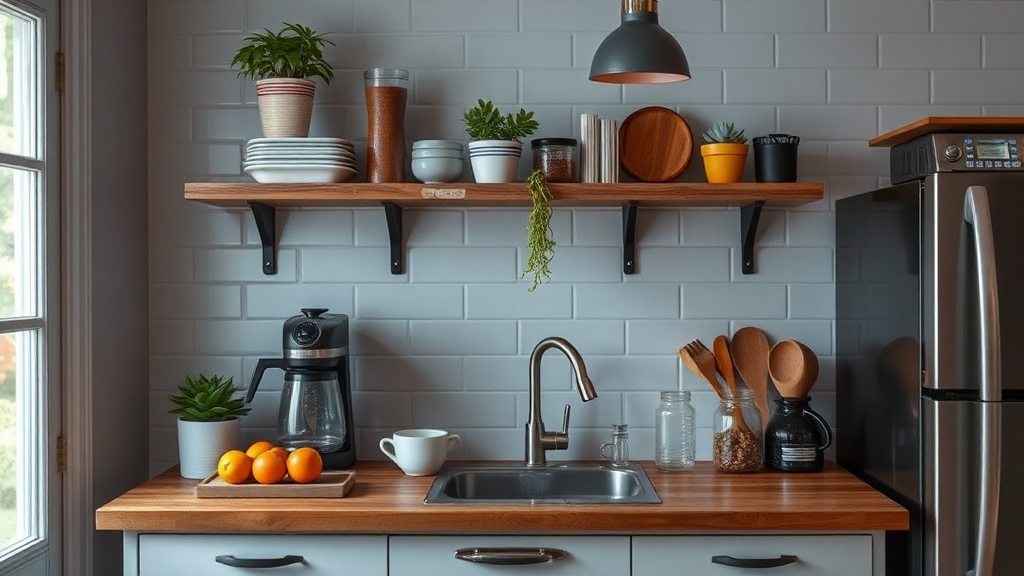
- Floating Shelves: A single narrow shelf above the machine can hold your prettiest ceramic mugs or your coffee bean canisters.
- Hanging Mug Racks: These attach to the underside of a cabinet, keeping the mugs within reach but completely off the counter.
Using a pegboard or a rail system is a great way to incorporate smart vertical design for tiny homes. It adds a bit of personality to the kitchen while being incredibly functional. Plus, it's easy to adjust as your collection grows.
One tip: Don't overdo it. If you hang twenty different things on your wall, it might start to look cluttered rather than curated. Keep the selection tight. Only hang what you actually use every morning.
If you have a very shallow counter, look into the depth of your accessories. A wide, shallow tray might be better than a tall, narrow one if you're worried about things tipping over. Stability is key, especially in a tiny home that might be on a foundation that moves slightly or a chassis that experiences vibration. (I've seen people try to build coffee stations in van-conversions, and stability is a huge deal there.)
A well-designed coffee station shouldn't just look good—it should make your morning routine smoother. Whether you use a small section of your main counter or a dedicated piece of furniture, the key is intentionality. Every item should have a home, and every tool should be easily accessible without needing to move five other things out of the way. It's about creating a sense of order in a space where every inch counts.