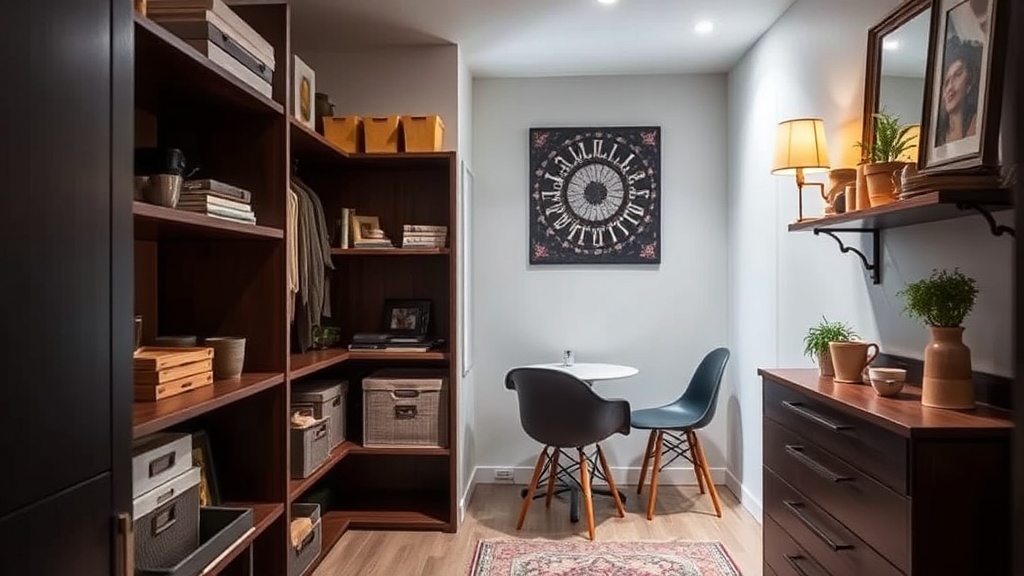
Narrow Storage Ideas That Fit Where Nothing Else Will

This post covers practical narrow storage solutions for spaces under 12 inches wide—the awkward gaps between furniture, slim wall sections, and tight corners that most people ignore. You will learn how to identify overlooked vertical spaces, choose furniture and organizers sized for narrow footprints, and implement DIY solutions that add storage without overwhelming small rooms. Whether you live in a studio apartment or a compact home with quirky layouts, these ideas help you reclaim every usable inch.
Where Are the Narrow Storage Opportunities You're Missing?
Most small homes have hidden gaps that go completely unused. That three-inch space between your fridge and the wall? The six-inch gap beside your washer and dryer? The skinny wall next to your bathroom door? These are narrow storage goldmines—if you know how to spot them.
Start by measuring the dead zones in your home. Grab a tape measure and check the width of gaps between major appliances, furniture, and walls. Look for vertical spaces above door frames, beside vanities, and between bookshelves. Anything over two inches wide can potentially hold something useful. Spaces between four and twelve inches are particularly valuable because they can accommodate slim rolling carts, narrow shelving units, and vertical organizers that do not protrude into walkways.
The trick is thinking vertically rather than horizontally. Narrow floor space becomes useful when you stack upward. A six-inch-wide gap next to your toilet can hold a three-tier slim cart with toilet paper, cleaning supplies, and extra towels. That awkward space between your kitchen cabinets and the wall? Perfect for a pull-out spice rack or cutting board storage. The key is measuring precisely—down to the quarter-inch—before buying anything.
What Furniture Actually Works in Spaces Under 12 Inches?
Finding furniture with small footprints requires looking beyond standard retail offerings. Most big-box stores design for average homes with generous square footage. For tiny spaces, you need pieces specifically scaled for narrow dimensions—or creative alternatives that serve double duty.
Console tables with depths under ten inches work beautifully behind sofas, in entryways, and along hallway walls. Look for designs with open shelving below for baskets or bins. In the bedroom, consider a narrow storage bench at the foot of your bed—many models measure just eleven inches deep while providing seating and hidden compartments for linens or off-season clothing.
Wall-mounted options eliminate floor space concerns entirely. Floating shelves with four-inch depths hold books, plants, and decorative objects without protrusion. Wall-mounted desks with drop-down fronts disappear completely when not in use—some models extend only six inches from the wall when closed. For kitchens, magnetic knife strips and slim spice racks mount directly to backsplash tiles, keeping counters clear.
Do not overlook furniture with wheels. Rolling carts measuring six to eight inches wide slide into gaps between appliances, then pull out when needed. A slim rolling pantry fits that awkward space beside your refrigerator and brings canned goods within easy reach. The mobility factor means you can reposition storage as your needs change—a flexibility that matters enormously in small spaces.
Can You Build Custom Narrow Storage Yourself?
DIY narrow storage often outperforms store-bought alternatives because you build precisely for your space. Custom solutions cost less than you might expect and require only basic tools and skills.
For that awkward gap beside your stove or bathroom vanity, build a simple rolling pull-out cabinet using plywood, casters, and drawer slides. Cut the box to your exact measurements—width, depth, and height. Add shelves spaced for your specific items: taller spacing for cleaning bottles, shorter for canned goods. Mount heavy-duty casters rated for at least 100 pounds so the unit rolls smoothly when loaded.
Vertical wall storage requires minimal carpentry. Install simple floating shelves using brackets and boards cut to your desired depth. For a cleaner look, use concealed floating shelf hardware available at any hardware store. Stagger shelf heights to accommodate items of varying sizes—tall spaces for vases and pitchers, shorter zones for books and small plants.
Doors and cabinet sides offer untapped real estate. Mount shallow wire baskets or small wooden crates to the backs of closet doors for shoes, accessories, or cleaning supplies. Add adhesive hooks to cabinet sides for hanging pot lids, cutting boards, or oven mitts. These solutions add zero floor footprint while creating significant storage capacity.
For more detailed DIY guidance, This Old House offers excellent tutorials on building custom slim storage cabinets designed specifically for challenging layouts.
How Do You Make Narrow Storage Look Intentional?
The biggest challenge with narrow storage is avoiding a cluttered, afterthought appearance. Slim furniture and organizers can look piecemeal if not styled thoughtfully. The solution lies in treating narrow storage as intentional design elements rather than desperate space fillers.
Choose a consistent material palette. If your narrow shelving is wood, match the tone to existing furniture or flooring for visual cohesion. Metal storage units should coordinate with existing hardware finishes—brass with brass, black with black. This consistency makes narrow pieces feel like deliberate design choices.
Style narrow surfaces minimally. A slim console table behind a sofa needs just one or two carefully chosen objects—a small lamp, a single framed photo, a tiny plant. Resist the urge to fill every inch. Negative space actually makes narrow storage feel more sophisticated and less cluttered.
Consider sight lines carefully. Position narrow storage where it does not block pathways or create visual barriers. A slim bookshelf works beautifully against a wall but becomes an obstacle in a walkway. Wall-mounted narrow storage should sit above head height in traffic areas or at seated eye level along walls.
For inspiration on styling small-scale furniture, Apartment Therapy's collection of small-space storage solutions demonstrates how narrow pieces can anchor room designs rather than merely filling gaps.
Which Rooms Benefit Most from Slim Storage Solutions?
While every room in a tiny home can use narrow storage, certain spaces see outsized benefits from slim-profile solutions.
Kitchens notoriously lack storage, and narrow options fill specific gaps beautifully. The space above cabinets—often twelve inches or less to the ceiling—holds baskets of infrequently used items. The slim gap beside refrigerators accommodates rolling pantries for canned goods. Even the two-inch space between your backsplash and upper cabinets can hold magnetic spice containers or knife strips.
Bathrooms present unique narrow storage opportunities thanks to plumbing fixtures creating awkward gaps. The space beside pedestal sinks fits narrow shelving units for toiletries. Above-toilet spaces—often underutilized—accommodate slim etageres for towels and supplies. Shower caddies that mount flat against walls preserve precious elbow room in tiny stalls.
Bedrooms and closets benefit from narrow storage at the perimeter. Slim shoe racks fit behind doors. Narrow jewelry armoires mount on walls. Even the gap under beds—typically six to twelve inches—accepts rolling bins designed specifically for low-clearance storage.
For product-specific recommendations, IKEA's narrow storage collection offers affordable, well-designed options sized specifically for tight spaces.
Making Narrow Storage Work Long-Term
The best narrow storage solutions grow with your needs. Choose modular systems that allow reconfiguration as your storage requirements change. Avoid built-in solutions unless you are certain the layout will remain static—in tiny homes, flexibility matters more than permanence.
Audit your narrow storage annually. Remove items you no longer use. Reconfigure shelf heights if your storage needs shift. The beauty of slim-profile solutions is their adaptability—rolling carts move, wall-mounted shelves relocate, and modular bins reconfigure. Treat narrow storage as evolving systems rather than static installations.
Remember that narrow storage solves specific problems for specific spaces. What works in your current tiny home may not suit your next space—and that is fine. The skills you develop in measuring, fitting, and styling narrow storage transfer to any small living situation. You are building expertise in seeing possibility where others see only limitations.
Small living is not about deprivation—it is about intention. Every narrow gap filled thoughtfully adds function without sacrificing the openness that makes tiny spaces feel livable.