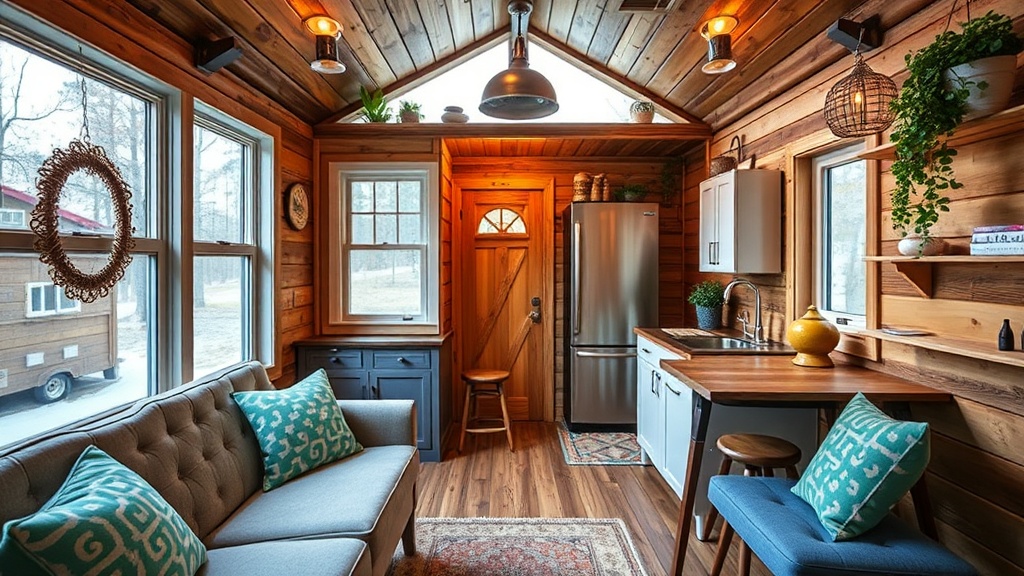
5 Clever Small-Space Ideas That Make Tiny Homes Feel Twice as Big

Install Floor-to-Ceiling Vertical Storage
Use Mirrors to Bounce Natural Light
Choose Multipurpose Furniture Pieces
Embrace Hidden Storage Under Stairs
Opt for a Light, Neutral Color Palette
Living in a tiny home doesn't mean settling for cramped quarters or cluttered countertops. This post breaks down five practical, design-forward strategies that stretch every square foot—so the space feels open, functional, and genuinely comfortable. Whether you're building a THOW (tiny house on wheels) in Fredericton or downsizing a city apartment, these ideas work.
What Are the Best Storage Hacks for Tiny Homes?
The best storage hacks exploit vertical space, hide clutter in plain sight, and turn "dead" zones into usable real estate. Think floor-to-ceiling shelving, toe-kick drawers, and ceiling-mounted racks.
Most tiny homes top out around 400 square feet. That limitation forces a shift: storage can't be an afterthought. It has to be baked into the architecture.
Start with the kitchen. Standard base cabinets waste the four inches of space above the toe kick. Install toe-kick drawers (IKEA sells SEKTION base cabinets with this option) and suddenly there's room for baking sheets, cutting boards, or pet food bowls. Overhead, mount a pot rack—the Enclume Premier collection hangs well and looks sharp. Pots and pans become decor instead of cabinet clutter.
In the bedroom, the area under a platform bed is prime territory. Rather than shoving plastic bins underneath, build drawers on casters that pull out smoothly. Wayfair's custom platform beds often include this feature, though a local carpenter in New Brunswick can fabricate something sturdier for about the same price.
Don't ignore the walls. A pegboard system—Wall Control's metal pegboards are popular among tiny home dwellers—keeps tools, office supplies, and even kitchen utensils off countertops. Mount one near the entry for keys, bags, and dog leashes.
Here's a quick look at how common storage upgrades compare on cost and difficulty:
| Storage Upgrade | Est. Cost | DIY Difficulty | Best For |
|---|---|---|---|
| Toe-kick drawers | $75–$150 per cabinet | Moderate | Kitchens, bathrooms |
| Platform bed drawers | $200–$600 | Moderate to hard | Bedrooms, studio layouts |
| Metal pegboard wall | $50–$120 | Easy | Entryways, offices, kitchens |
| Ceiling-mounted rack | $100–$300 | Moderate | Bikes, seasonal gear, pots |
Worth noting: not every hack needs a contractor. Some of the most effective upgrades take an afternoon and a cordless drill.
How Do You Make a Small Room Feel Bigger With Paint and Light?
Light, cool paint colors—soft whites, pale grays, muted blues—reflect more natural light and blur the boundaries of a room, making it feel larger than it is. Pair that with layered lighting (ambient, task, and accent) and the space opens up visually.
Dark colors absorb light. In a sprawling living room that might feel cozy; in a 180-square-foot tiny home it can feel like a cave. That said, an accent wall in Benjamin Moore's "Hale Navy" or Sherwin-Williams "Sea Salt" can add depth without overwhelming the space. The trick is contrast—keep the remaining walls light and airy.
Natural light is the best asset. If you're still in the design phase, spec larger windows or a skylight (Velux makes reliable, energy-efficient models). For existing builds, swap heavy drapes for sheer roller shades or leave windows bare where privacy allows. Mirrors opposite windows bounce light deep into the room. A large, simple mirror from CB2 or a secondhand find from a Fredericton antique shop works wonders.
Artificial lighting matters just as much. A single overhead fixture creates harsh shadows and dead corners. Instead, use:
- Recessed LED downlights for general illumination (thin-profile cans from Lithonia Lighting fit tight ceilings)
- Under-cabinet LED strips in the kitchen and bathroom to eliminate shadowy work zones
- Wall sconces with swing arms—no floor space required, and they add visual interest
The result? A room that feels taller, wider, and more welcoming after sundown.
Can Multi-Functional Furniture Really Transform a Tiny House?
Yes—when chosen carefully, multi-functional furniture replaces two or three standalone pieces, freeing up floor space and reducing visual clutter. The key is picking items that switch modes without a wrestling match.
A wall-mounted Murphy bed is the classic example. Resource Furniture's "Penelope" model folds vertically into a sleek cabinet; some versions include a built-in sofa and shelving. By day it's a living room. By night it's a bedroom. The catch? Quality Murphy beds aren't cheap—expect $3,000 to $6,000 installed—but they reclaim 30 to 40 square feet of usable floor space.
On a smaller budget, a storage ottoman (like those from Article or IKEA's VALLENTUNA series) works as seating, a coffee table, and a blanket bin. A drop-leaf dining table expands for dinner guests and tucks against the wall the rest of the time. West Elm's "Mid-Century Expandable Dining Table" gets good reviews for exactly this use case.
Here's the thing: multi-functional furniture only works if you'll actually use both functions. A sleeper sofa that never gets unfolded is just a mediocre couch taking up space. Be honest about daily habits before buying.
Why Does Vertical Space Matter More Than Floor Space?
In tiny homes, the floor plan is fixed—but the walls and ceiling are underused assets. Building upward creates storage, defines zones, and draws the eye up, which makes the whole space feel taller.
Lofted sleeping areas are the most dramatic example. By moving the bed above the main living zone, you effectively double the usable square footage of that footprint. Tumbleweed Tiny House Company and Escape Traveler both offer models with well-designed lofts that include safety rails, built-in stairs with storage, and adequate headroom. (The catch? You need to be comfortable climbing a ladder at midnight.)
Even without a loft, vertical thinking changes everything. Install open shelving above doorways for books or baskets. Hang bikes on the wall with a feedback sports rack instead of leaning them in a corner. Mount a fold-down desk from Wallbeds n More at standing height and pair it with a tall stool—when work is done, the stool tucks underneath and the desk folds flat.
Plants, too, benefit from vertical placement. A living wall or simple hanging planters (the Umbra Triflora trio is a favorite) bring in greenery without sacrificing counter space. The eye travels upward. The room breathes.
What Small Layout Changes Deliver the Biggest Impact?
The single biggest impact comes from eliminating visual barriers—open floor plans, glass partitions, and consistent flooring make a tiny home feel significantly larger than its square footage suggests.
Walls chop space into smaller boxes. In a traditional home that's fine; in a tiny home it's suffocating. Many builders now favor a single open room with distinct zones created through furniture placement, lighting, and rugs rather than drywall. A kitchen island on castors can face the living area during the day and pivot toward the cook space at dinner. No walls required.
If privacy demands some separation, swap solid doors for sliding barn doors or frosted glass panels. They block sightlines when needed but disappear or stay translucent, preserving that sense of flow. IKEA's PAX system can be adapted with sliding panels to create a flexible bedroom nook in a studio layout.
Consistent flooring is another underrated tool. Using the same luxury vinyl plank (Shaw's "Coretec" line holds up well) from the kitchen through the living area and into the bedroom erases visual boundaries. When the eye doesn't hit a threshold or a color change, the brain registers one continuous space.
"The best tiny homes don't feel tiny. They feel intentional." — Felix Reid, tinyhomes.blog
Even something as simple as relocating the entry door can improve flow. A centered door often wastes wall space on both sides; shifting it to a corner frees up an uninterrupted stretch for storage or seating. If you're working with a builder, push for a layout review before finalizing plans. An hour of design tweaks can save years of bumping elbows.
Small living rewards clarity. Every item earns its place. Every square foot has a job. These five ideas—smart storage, light and color, flexible furniture, vertical thinking, and open layout moves—aren't about sacrifice. They're about making 300 square feet feel like 600. That's not magic. It's good design.
For more on the psychology of small spaces, check out Apartment Therapy's tiny home coverage. If you're researching builders in Atlantic Canada, HGTV Canada profiles several regional designers. And for technical building specs, the National Fire Protection Association offers safety guidelines worth reviewing before you break ground.