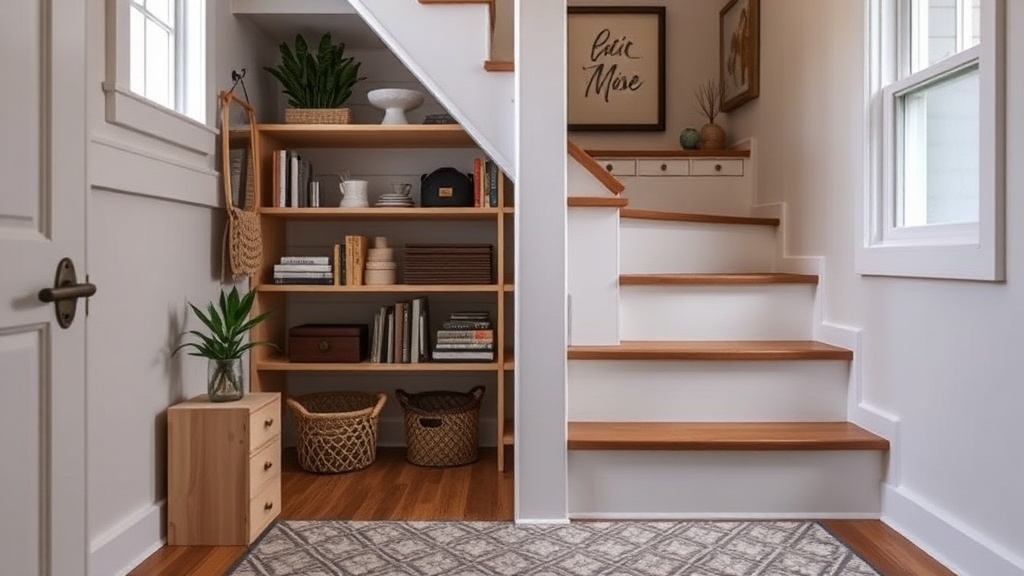
10 Clever Under-Stair Storage Ideas for Tiny Homes

Under-stair space is often the most overlooked real estate in a tiny home. This post covers ten practical, space-smart ways to reclaim that awkward triangular void beneath the staircase—from pull-out pantries and pet nooks to hidden offices and wardrobe closets. If square footage matters (and in a tiny home, it always does), converting dead space beneath the stairs into functional storage isn't just clever. It's necessary.
What Can You Store Under Stairs in a Tiny Home?
Practically anything that fits the dimensions and your daily routine. Shoes, books, pantry goods, clothing, pet beds, cleaning supplies, and even a compact desk can slide neatly into that sloped cavity. The key is matching the storage type to the available headroom—taller items toward the front where ceiling height peaks, flatter or sliding solutions toward the back where it tapers.
How Much Storage Space Do Stairs Waste in a Small House?
More than you'd expect. A standard straight-run staircase in a 200-square-foot loft-style tiny home can waste anywhere from 25 to 40 cubic feet of usable volume. That's the equivalent of a small closet. In a 400-square-foot model, the number climbs closer to 60 cubic feet. Here's the thing: builders often drywall it off or leave it as an open, messy cavity. Sealing it away is like paying rent on a room you'll never use.
Are Custom Pull-Out Drawers Worth the Investment?
Yes—if the budget allows and the layout suits sliding hardware. Custom pull-out drawers maximize every inch of the sloped cavity, but they aren't the only option. A mix of fixed shelving, hinged doors, and rolling bins can cost far less while still delivering excellent utility. The catch? Cheap drawer hardware sags under weight and can jam in humid climates. If you're going custom, invest in heavy-duty slides ( brands like Blum or Accuride) and moisture-resistant plywood.
10 Clever Under-Stair Storage Ideas
1. Pull-Out Pantry Drawers
Kitchen space in a tiny home is tight—often just six to eight feet of counter. Installing deep, full-extension drawers beneath the stairs creates a walk-in pantry feel without the walk-in footprint. Each drawer can hold spices, dry goods, and small appliances. IKEA's SEKTION cabinet frames (cut to fit the slope) paired with Blum TANDEM slides offer a budget-friendly starting point. Worth noting: keep heavy items (pots, cast-iron skillets) in lower drawers; reserve upper ones for lightweight pantry goods.
2. Built-In Bookshelves
Bookshelves are the simplest retrofit. Open shelving facing the living area turns the stair cavity into a design feature. For a clean look, paint the shelves the same color as the walls—Sherwin-Williams Alabaster or Benjamin Moore Simply White work well in small spaces. If dust is a concern, add cabinet doors to the lower shelves and leave the upper ones open. That said, books get heavy fast. Use 3/4-inch birch plywood or solid pine boards, not particleboard, to prevent sagging.
3. Compact Home Office
Remote work isn't going anywhere. The tallest section beneath a staircase—usually the first three to four feet from the front—can house a floating desk, a small monitor, and a wall-mounted pegboard for supplies. The IKEA ALEX drawer unit (29 1/2 inches wide) fits neatly under many tiny house stair runs and provides file storage below the desk surface. Add a slim LED task light from West Elm and you've got a legitimate workstation in about 12 square feet.
4. Wardrobe Closet
Clothing storage is a chronic pain point in tiny homes. The space under stairs can become a full wardrobe with a hanging rod at the front (where headroom peaks) and shoe cubbies or folded-sweater bins toward the rear. California Closets offers modular systems that can be trimmed to fit angled ceilings, though a local carpenter in Fredericton or Portland, Oregon can often build a custom solution for less. Install a motion-sensor light inside so you're not fumbling in the dark.
5. Pet Nook
Dogs and cats need territory too. A recessed alcove under the stairs—complete with a built-in bed platform and hooks for leashes—gives pets a cozy den without eating up floor space. Add a small vent or louvered door for airflow. The Container Store's ELFA mesh drawers slide nicely into the lower portion for toy and treat storage. If you have a larger breed, skip the enclosed nook and opt for an open bench instead.
6. Wine and Beverage Storage
The cool, shaded environment beneath stairs is ideal for wine. Horizontal racks or diamond-shaped cubbies keep bottles stable and accessible. For a more casual approach, install a shallow beverage fridge (like the NewAir 15-inch built-in wine cooler) in the front section and use the back for glassware storage. This works especially well if your tiny home's living area doubles as entertaining space.
7. Shoe Cubbies
Mudrooms are a luxury most tiny homes can't afford. Shoe cubbies under the stairs act as a drop zone for boots, sneakers, and sandals. Build angled shelves or use simple IKEA TROFAST bins on casters. In rainy climates—think the Pacific Northwest or Atlantic Canada—a slatted design lets wet footwear dry without trapping moisture. Place a small bench at the front for pulling shoes on and off.
8. Reading Bench with Bins
Sometimes storage should double as seating. A padded bench across the front of the stair cavity creates a reading nook; lift the seat or add pull-out bins underneath for linens, board games, or off-season clothing. Pottery Barn's modular bench cushions can be cut to custom lengths, though local upholstery shops in cities like Asheville, North Carolina often beat their prices. Throw in a wall sconce and a few pillows and you've claimed a new living zone.
9. Bathroom Vanity
In tiny homes where the bathroom sits adjacent to the stairs, the void beneath can house a sink, vanity, and recessed medicine cabinet. This layout is common in 24-foot trailers from builders like Tumbleweed Tiny House Company. The slope of the stairs defines the vanity height—place the sink at the front where standing room is tallest, and tuck toiletries into drawers that follow the angle. A vessel sink works well here because it sits above the counter, buying you a few extra inches of clearance.
10. Display Shelving for Collectibles
Not every inch of storage needs to hide behind doors. Floating shelves mounted on the stair risers or inside the cavity can showcase plants, pottery, or travel souvenirs. Keep the palette restrained—too many colors make a small space feel cluttered. Wayfair sells floating shelf brackets rated for 50 pounds or more; just be sure to anchor them into studs, not just drywall or thin trailer siding.
Comparing Under-Stair Storage Solutions
Not every idea fits every budget or skill level. Here's how common options stack up on cost, difficulty, and storage capacity.
| Storage Type | Approximate Cost | DIY Difficulty | Best For |
|---|---|---|---|
| Open Bookshelves | $150 – $400 | Beginner | Books, decor, light baskets |
| Pull-Out Drawers | $500 – $2,000 | Intermediate | Pantry items, clothing, tools |
| Custom Wardrobe | $800 – $3,500 | Advanced / Pro | Hanging clothes, shoes, accessories |
| Pet Nook | $100 – $600 | Beginner to Intermediate | Pet beds, toys, leashes |
| Built-In Desk | $300 – $1,200 | Intermediate | Remote work, crafts, paperwork |
| Reading Bench + Bins | $250 – $900 | Beginner to Intermediate | Linens, games, seasonal items |
Design Tips That Make or Break Under-Stair Storage
Before you grab a saw, measure the triangle. The front third of the space—where ceiling height exceeds 48 inches—should handle anything you stand in front of. The middle third works for seated tasks or pull-out drawers. The back third (often under 24 inches) is best for shallow shelving, rolling bins, or dead storage you access seasonally.
Lighting matters more than people think. A dark cavity under the stairs feels like a cave. Battery-powered LED strip lights (such as those from Apartment Therapy's under-stair roundups) or hardwired puck lights eliminate shadows and make the space feel intentional. If you're running electrical anyway, add an outlet for charging devices or powering a small fridge.
Ventilation is another detail that's easy to skip. Enclosed storage under stairs can trap humidity, especially in bathrooms or entryways. Drill discreet vent holes, use louvered doors, or leave a small gap behind drawers to let air circulate. In coastal tiny homes—places like Vancouver Island or coastal Maine—this step prevents mold before it starts.
For inspiration on built-in configurations and layout ideas, Houzz's guide to stair storage offers hundreds of photos from real projects. And if you're weighing whether to hire a carpenter or go full DIY, The Spruce breaks down material costs and typical labor rates by region.
Finally, don't let perfection paralyze progress. Even a single shelf and a few baskets under the stairs reclaim more space than most tiny home owners realize. Start with what you need most—a pantry, a desk, a closet—and build outward. The stairs aren't going anywhere. You might as well make them work harder.