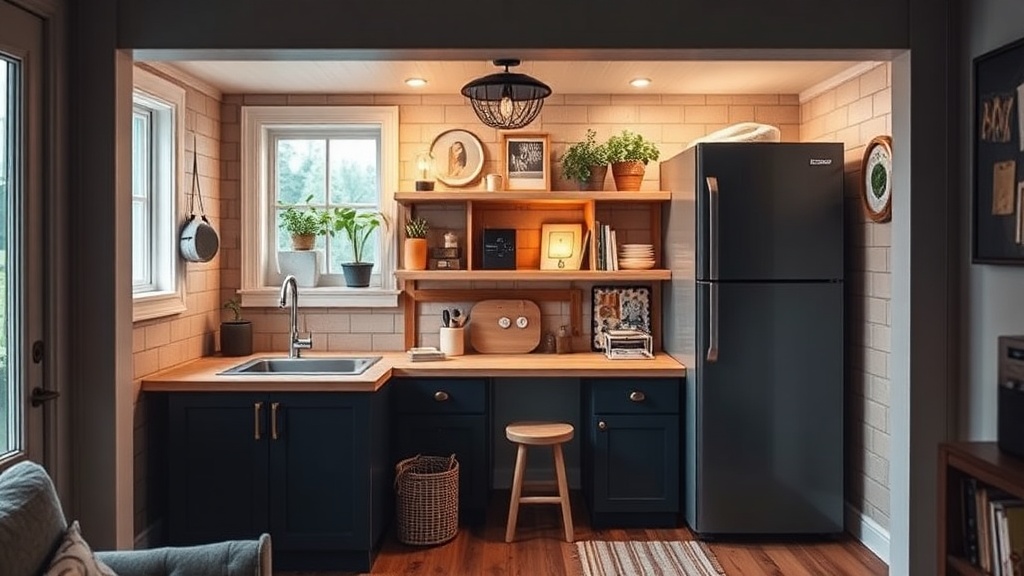
10 Clever Storage Hacks That Will Transform Your Tiny Home

Under-Stair Drawers: The Hidden Storage Goldmine
Magnetic Wall Strips for Kitchen Tools and Spices
Ottoman Beds with Lift-Top Storage Compartments
Ceiling-Mounted Pot Racks and Hanging Shelves
Fold-Down Desks That Disappear Into the Wall
Limited square footage doesn't mean living with clutter. This post covers ten practical storage solutions—from vertical wall systems to hidden compartments—that maximize every inch of a tiny home. Whether you're downsizing, renovating a small space, or planning a new build, these hacks deliver real, usable storage without sacrificing style or comfort.
1. The Magic of Magnetic Walls
Metal surfaces aren't just for refrigerators anymore. Magnetic storage transforms blank walls into functional organization zones. The key is pairing strong magnetic strips or panels with the right containers—spice jars, knife blocks, tool holders, even small planters.
Felix installed galvanized steel sheets behind his kitchen counters in Fredericton. The result? Every utensil, spice, and cooking oil stays within arm's reach. No drawers to open. No counter space wasted. The steel cost roughly $80 from a local metal supplier—far less than custom cabinetry.
Here's the thing: not all magnets work equally. Neodymium (rare earth) magnets hold significantly more weight than standard ferrite ones. For heavy items like cast iron pans, use magnetic hooks rated for at least 25 pounds. The downside? These magnets can scratch surfaces if dragged. Lift, don't slide.
2. Stair Drawers: The Space You're Walking On
Stairs to a loft bed or storage area present a massive opportunity. Each step becomes a pull-out drawer—perfect for shoes, linens, seasonal clothing, or pantry items. Companies like Tumbleweed Tiny House Company have offered stair storage for years, but DIY options abound.
The build requires precise measurements. Drawers need clearance—typically 1/8 inch on all sides—to slide smoothly. Soft-close drawer slides prevent slamming (and the noise that travels through small spaces). Expect to spend a weekend on construction if you're handy with basic tools.
Worth noting: stair drawers work best in stationary tiny homes. In THOWs (tiny homes on wheels), the vibration of travel can cause contents to shift. Consider adding lip edges or small retaining bars inside each drawer.
3. Where Should You Store Items You Rarely Use?
Out-of-season gear, holiday decorations, and sentimental items belong in the dead space above cabinets, below floors, and inside walls. Ceiling-mounted storage racks—like those from Racor—install in joist cavities and hold up to 250 pounds. The hardware runs about $60-80 per rack.
Floor hatches represent another overlooked option. A 24x24 inch opening between floor joists creates roughly 6 cubic feet of storage. Line the cavity with moisture-resistant materials (plastic sheeting works) and add weatherstripping to the hatch lid. This space stays cool—ideal for wine, root vegetables, or canned goods.
The catch? Accessibility. Items stored in these zones require effort to retrieve. Label everything. Use clear bins. And resist the urge to store anything needed more than twice yearly in these "deep storage" areas.
4. Furniture That Works Double-Duty
Ottomans with storage. Beds with drawers underneath. Tables that fold into walls. Multi-functional furniture isn't new—but the designs keep improving. The key distinction: active storage (daily use) versus passive storage (occasional access).
The Wallbeds by Wilding wall bed system includes side piers with adjustable shelving. Pricing starts around $2,500—a significant investment, but cheaper than adding square footage. For smaller budgets, IKEA's BRIMNES line offers beds with four integrated drawers starting at $299.
That said, avoid furniture that transforms too often. A dining table that folds into a wall seven days a week becomes annoying by day three. The best multi-functional pieces serve their secondary purpose weekly, not daily.
| Furniture Type | Best For | Price Range | Drawbacks |
|---|---|---|---|
| Storage ottoman | Blankets, remotes, gaming controllers | $50-$200 | Limited capacity; items get buried |
| Lift-top coffee table | Work surface + hidden storage | $150-$400 | Heavy to lift; mechanism wears |
| Captain's bed (drawers) | Clothing, linens | $300-$800 | Requires clearance to open drawers |
| Wall-mounted drop desk | Office work, dining | $200-$600 | Must clear surface before folding |
5. The Back-of-Door Revolution
Doors swing through empty air—that's storage real estate. Over-the-door organizers have evolved beyond flimsy shoe holders. Elfa door racks (from The Container Store) mount with screws and hold serious weight—think cleaning supplies, pantry items, or bathroom products.
Inside cabinet doors works too. Small spice racks, foil dispensers, and even fold-down ironing boards attach to interior surfaces. The key measurement: clearance. When closed, nothing should touch the cabinet contents.
RV and marine suppliers offer specialized door-mounted options. The Camco 43581 refrigerator bars—designed to keep items secure during travel—work brilliantly on any narrow shelf. A three-pack costs under $10.
6. How Do You Maximize Vertical Space Without Looking Cluttered?
Vertical storage fails when it becomes visual chaos. The solution? Contained systems with defined boundaries. Floating shelves with guard rails. Pegboards with outlined tool positions. Grid systems with uniform bins.
The French cleat system deserves more attention. A wooden strip with a 45-degree angle mounts to the wall; matching strips attach to shelves, cabinets, or tool holders. Everything hangs securely yet moves freely. A 4-foot pine cleat runs about $8 at hardware stores. Custom walnut versions from Etsy sellers cost ten times that—but look stunning.
Visual consistency matters more than you'd think. Matching containers (clear for visibility, or uniform opaque for cohesion) make open shelving feel intentional rather than messy. The IRIS Weathertight Totes stack securely and seal out dust—critical in homes where every surface is close to living areas.
7. Toe-Kick Drawers: The Last Frontier
The space beneath lower cabinets—usually covered with a decorative kick plate—measures roughly 4 inches high and spans the entire cabinet run. That's 3-6 cubic feet of storage in a typical tiny kitchen. Toe-kick drawers install in this void, perfect for baking sheets, cutting boards, pet food bowls, or flat emergency supplies.
Installation requires removing the existing kick plate and installing drawer slides rated for horizontal mounting. Blum's TANDEMBOX system includes a toe-kick drawer option—pricey at $150-200 per drawer, but smooth and durable. DIY builds using heavy-duty full-extension slides cost half as much.
These drawers sit close to the floor. Store items that can handle dust—and keep weight reasonable, since bending to lift heavy objects strains backs.
8. Pegboard: More Versatile Than You Remember
Metal pegboard (like Wall Control) outperforms the Masonite versions from hardware stores. It doesn't warp, accepts magnets, and comes in colors beyond industrial beige. A 4x4 foot panel runs $50-70—enough to organize an entire kitchen wall.
The flexibility is the point. Move hooks as needs change. Add shelves for spices. Hang baskets for produce. Unlike fixed shelving, pegboard evolves with your habits.
In Felix's bathroom, perforated steel panels hold hair dryers, brushes, and toiletries—keeping the tiny vanity clear. The same system works in entryways for keys, bags, and dog leashes. The key is clustering related items into "zones" rather than scattering hooks randomly.
9. What Storage Solutions Work Best for Tiny Home Offices?
Remote work from 200 square feet demands ruthless efficiency. The answer: vertical file systems, monitor stands with integrated storage, and cable management that actually works.
The Herman Miller Oripura laptop stand folds flat when not needed—a rare quality in monitor arms. For document storage, ditch filing cabinets. Wall-mounted magazine files (IKEA's KVISSLE series) hold active papers vertically, taking zero desk space.
Cable management fails most often at the power strip. Mount strips to the underside of desks using 3M Command strips (rated for 5 pounds) or screw-mounted brackets for heavier setups. Label every cord at both ends. In small spaces, tracing mystery cables wastes precious minutes.
Consider a fold-down desk if work happens sporadically. The Shelfology Aksel LED floating shelf includes a drop-down work surface—beautiful oak when closed, functional desk when open. At $400+, it's an investment, but eliminates the need for a dedicated office zone.
10. The Under-Sink Transformation
Bathroom and kitchen sinks occupy cabinet space dominated by plumbing. Standard organizers fail because they don't accommodate pipes. The solution: tiered organizers with cutouts or adjustable heights.
The simplehuman Pull-Out Cabinet Organizer works around P-traps with a two-tier design. The top shelf slides forward independently, accessing items behind pipes. At $50, it transforms awkward voids into usable space.
For deeper storage, consider a sliding trash system. The Rev-A-Soft pull-out mounts to cabinet floors, keeping bins tucked away but accessible. Tiny homes benefit doubly—trash stays contained (reducing odors in small spaces) and floor space remains clear.
One last trick: adhesive hooks inside cabinet doors hold hair dryers, cleaning bottles, or spray cans. These items occupy premium shelf space elsewhere. On the door, they vanish when closed.
Storage in tiny homes isn't about owning less—though that helps. It's about seeing every opportunity: the walls, the stairs, the doors, the gaps. The best tiny home dwellers think in three dimensions, storing up and down rather than outward. These ten hacks provide starting points. Adapt them. Combine them. And measure twice before drilling into anything.