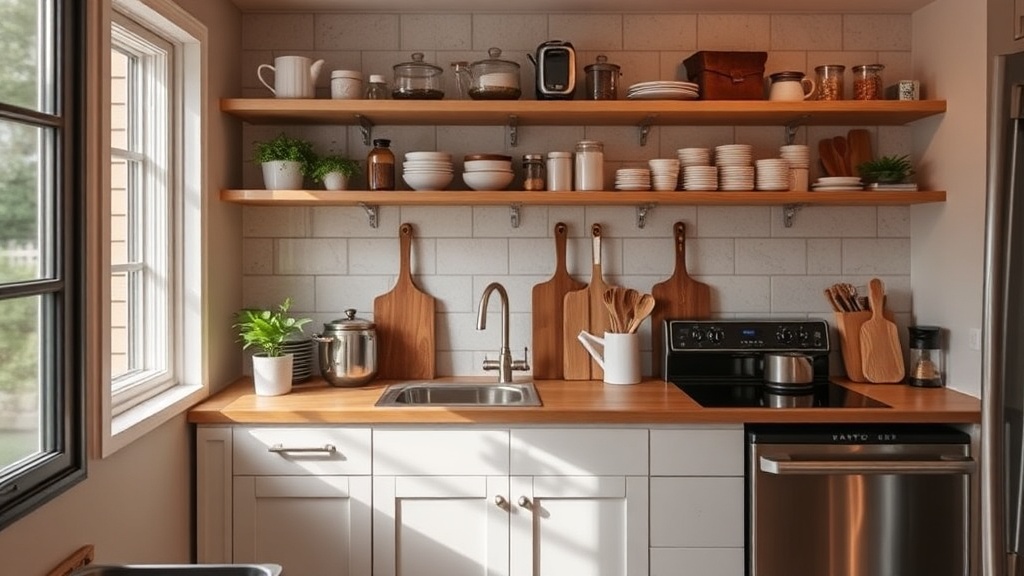
10 Clever Storage Hacks for Tiny Kitchens That Actually Work

This guide covers ten storage solutions specifically designed for kitchens under 100 square feet. Small kitchens don't have to mean cluttered countertops and overflowing drawers — with the right approach, even the tiniest galley kitchen can function like a space twice its size.
Why Do Tiny Kitchens Feel So Cluttered?
Tiny kitchens feel cluttered because most were designed for a different era of cooking. Appliances have grown bulkier, pantries have shrunk or disappeared entirely, and the average home cook now owns more gadgets than ever. Combine that with limited counter space (sometimes less than 24 inches total), and you've got a recipe for chaos.
The real problem isn't the square footage — it's dead space. That awkward gap above the cabinets. The narrow sliver between the fridge and the wall. The cabinet interiors that waste half their volume. Here's the thing: every kitchen has these zones. The difference between a frustrating kitchen and a functional one comes down to how ruthlessly you exploit them.
How Do You Maximize Vertical Space in a Small Kitchen?
You maximize vertical space by treating every surface above eye level as fair game for storage — not just cabinets, but walls, the sides of appliances, and even the ceiling.
Magnetic Knife Strips and Spice Racks
Ditch the knife block. It eats six precious inches of counter space. A magnetic knife strip mounted at backsplash height keeps blades accessible and visible. The IKEA FINTORP rail system works well here — mount one for knives, another for hanging mesh baskets filled with garlic and shallots.
For spices, forget the cabinet takeover. Magnetic spice tins (the Kamenstein brand makes reliable ones) stick directly to your fridge side or a steel backsplash panel. You'll free up an entire shelf while keeping cumin and coriander within arm's reach of the stove.
Tension Rods Inside Cabinets
This trick costs under five dollars and transforms cabinet interiors. Install a tension rod horizontally near the top of a cabinet, and suddenly you have a hanging rail for spray bottles, dish gloves, or lightweight utensils. Install vertically between cabinet walls to create dividers for cutting boards, baking sheets, and serving trays.
What's the Best Way to Organize a Tiny Pantry?
The best way to organize a tiny pantry is to decant everything into clear, uniform containers and use tiered organizers to create visibility at every level.
Most tiny kitchens either lack a pantry entirely or offer a single narrow cabinet. That said, you don't need a walk-in to store dry goods efficiently. The key is eliminating packaging — those half-empty pasta boxes and irregular flour bags waste shocking amounts of space.
Decanting Strategy
Invest in airtight containers with flat sides. The OXO Good Grips POP containers work beautifully, but budget-friendly alternatives from IKEA (the 365+ series) or Target's Brightroom line perform just as well. Label everything with contents and expiration dates. Yes, it's tedious. Yes, it saves 30% of your shelf space instantly.
Door-Mounted Solutions
The back of your pantry door (or any cabinet door) is prime real estate. Over-the-door organizers designed for shoes work surprisingly well for snacks, sauce packets, and small jars. For a cleaner look, the Elfa door rack system from The Container Store offers adjustable baskets that mount directly to the door.
Can You Add Storage to Rental Kitchens?
You can add substantial storage to rental kitchens using adhesive hooks, tension-mounted solutions, and freestanding furniture that requires no installation.
Not everyone owns their space. Renters face restrictions — no drilling into tile, no permanent modifications, deposit anxiety. Worth noting: most storage hacks marketed to tiny kitchens assume you can wield a drill freely. That's not reality for apartment dwellers in places like Fredericton or Halifax where rental stock dominates.
Command Hooks and Adhesive Solutions
3M Command strips have come a long way. The current heavy-duty hooks hold up to five pounds, enough for lightweight shelving units, under-cabinet paper towel holders, or mounted tablet stands for recipe viewing. The adhesive damage-free picture ledges from Umbra work beautifully for displaying (and storing) attractive cookware.
Freestanding Island Hacks
A narrow rolling cart — the RÅSKOG from IKEA, the Target Threshold kitchen cart, or anything around 12-16 inches wide — slides into awkward gaps and provides instant prep space plus storage. Look for models with hooks on the side for towels or utensils, and a lower shelf for bulky pots.
10 Storage Hacks Ranked by Cost and Difficulty
| Hack | Cost | Installation | Best For |
|---|---|---|---|
| Tension rod cabinet dividers | $3-8 | None | Baking sheets, cutting boards |
| Magnetic knife strip | $15-30 | Minimal drilling | Counter space recovery |
| Adhesive hooks inside cabinets | $5-10 | Peel-and-stick | Rentals, temporary solutions |
| Under-shelf baskets | $8-15 each | Clip-on | Cabinets with tall shelves |
| Magnetic spice tins | $20-40 set | None | Fridge-side dead space |
| Over-door organizer | $15-35 | Over-door hooks | Pantry, cabinet backs |
| Roll-out cabinet drawers | $40-80 | Simple tools | Deep base cabinets |
| Pegboard wall panel | $30-60 | Wall mounting | Utensils, small tools |
| Pull-down cabinet shelves | $100-200 | Installation required | High cabinets, accessibility |
| Custom toe-kick drawers | $200+ | Professional | Maximizing every inch |
How Do You Store Pots and Pans Without Cabinets?
You store pots and pans using ceiling-mounted racks, wall-mounted rails, or vertical drawer organizers that separate lids from bases.
Pots and pans present the biggest storage challenge in tiny kitchens. They're bulky, irregularly shaped, and usually stored in the least accessible base cabinet — the one that requires yoga poses to reach. The catch? That cabinet often holds items used daily.
Ceiling-mounted pot racks work brilliantly in kitchens with standard eight-foot ceilings. The Enclume racks (made in the USA) run $150-300 but last decades. For renters or lower budgets, a wall-mounted rail system with S-hooks keeps cookware visible and reachable. The FINTORP rails from IKEA mentioned earlier handle cast iron just fine if properly anchored.
Lids are the real enemy — they slide, they stack poorly, they disappear. A simple lid organizer (the YouCopia StoreMore works well) mounted inside a cabinet door or on a wall keeps them corralled vertically.
What About the Awkward Spaces Everyone Ignores?
Awkward spaces — the gaps beside appliances, the false panels, the toe kicks — can yield surprising storage capacity with custom or semi-custom solutions.
That three-inch gap between your fridge and the wall? A slim rolling pantry (the Slide Out Storage Tower from mDesign, or DIY versions from lumber and casters) holds canned goods, cleaning supplies, or bulk purchases. Pull it out when needed, slide it back when done.
Toe-kick drawers — the space beneath your base cabinets — require more commitment. You'll remove the decorative toe-kick panel and install shallow drawers (about three inches deep). It's a weekend project or a job for a handyman, but it yields storage for baking sheets, serving platters, or emergency supplies. Several tiny home builders in British Columbia include these as standard now, recognizing that every inch matters in sub-200-square-foot spaces.
The false drawer fronts beneath your sink aren't false. Remove the panel and install a tip-out tray — those flimsy plastic trays hold sponges, scrub brushes, and the random detritus that otherwise colonizes your sink rim.
Under-Sink Real Estate
The cabinet beneath your kitchen sink is usually a black hole of cleaning supplies, plastic bags, and that one bottle of specialty cleaner you used once. Without organization, you access maybe 40% of the available space.
A tiered organizer with a sliding upper shelf (the simplehuman under-sink organizer justifies its $50 price tag) works around plumbing pipes while creating two full levels of storage. Add a small tension rod near the top for hanging spray bottles by their triggers — suddenly the cabinet floor is clear for bulkier items.
That said, be realistic about what belongs here. Store daily-use items (dish soap, hand soap, sponges) elsewhere if possible — under-sink space is better reserved for things used weekly or monthly. The prime real estate near your sink should hold what you actually reach for three times a day.
Final Thoughts on Function vs. Aesthetics
Tiny kitchen storage isn't about achieving Pinterest perfection. It's about creating systems that you'll actually maintain when you're exhausted and just want to eat cereal. The most beautiful labeled pantry fails if you won't put things back properly.
Start with one zone — just the cabinet nearest your stove, or just the drawer that holds your most-used utensils. Fix that space completely before moving on. Small victories compound faster than grand overhauls that collapse after a busy week. Your kitchen doesn't need to look like a magazine spread. It needs to work when you're trying to make coffee at 6 AM and can't find the filters.
The best storage hack is the one you'll use. Everything else is just cleverly disguised clutter.