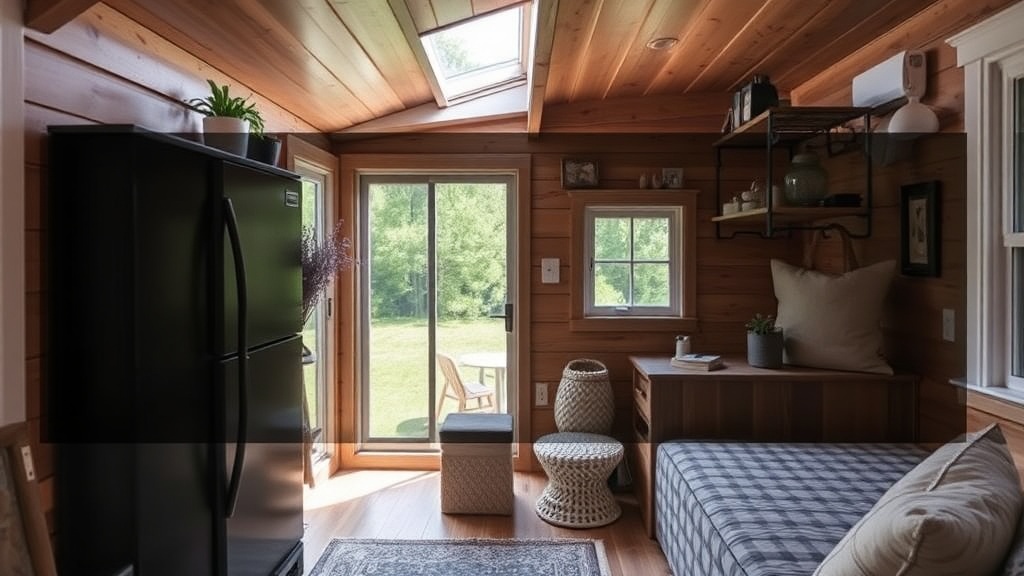
10 Clever Storage Hacks for Tiny Homes That Maximize Every Square Inch

Living in 400 square feet—or less—means every inch carries weight. This guide breaks down ten battle-tested storage strategies that transform cramped corners into functional space. You'll discover vertical solutions that climb walls, furniture that works double-duty, and overlooked nooks that swallow clutter whole. Whether you're building a tiny house from scratch or retrofitting an RV, these hacks reclaim floor space without sacrificing style.
How Do You Create Storage in a Tiny House Without Adding Square Footage?
You build upward and inward—exploiting vertical real estate and the hollow cavities already built into your structure. The trick isn't finding more room; it's recognizing the storage potential hiding in plain sight.
Start with the toe-kick drawer—a shallow pull-out installed beneath base cabinets in kitchens and bathrooms. That four-inch gap between cabinet bottom and floor? Dead space in most homes. In a tiny house, it becomes a hideaway for baking sheets, cutting boards, or cleaning supplies. IKEA's SEKTION system offers retrofit toe-kick drawers, or a local cabinet shop in Fredericton can fabricate custom versions for odd-sized openings.
Wall studs themselves present opportunity. The between-the-studs shelf recesses shallow storage into interior walls—perfect for spice racks in kitchens, toiletries in bathrooms, or bedside essentials. You'll sacrifice about four inches of room depth, but gain shelves that don't protrude into walkways.
The Vertical Kitchen Revolution
Kitchens demand the most creative solutions. A ceiling-mounted pot rack—like those from Enclume—suspends cookware overhead, freeing precious cabinet real estate. The rack doubles as visual interest; copper pots hanging against reclaimed wood create instant farmhouse appeal.
Magnetic strips mounted on backsplash tiles hold knives, scissors, and metal spice tins. Command strips work for lightweight items, but for heavier loads, install a Stainless Steel Magnetic Knife Holder from Schmidt Brothers with proper wall anchors.
What Multi-Functional Furniture Works Best for Tiny Home Storage?
Furniture that stores, transforms, or disappears entirely. The best pieces earn their footprint by serving at least two purposes—sometimes three.
The storage ottoman reigns supreme in living areas. The Burrow Nomad Ottoman hides 30+ gallons of storage beneath its tufted top—enough for throw blankets, board games, or off-season clothing. Pair it with a lift-top coffee table (the Sauder Dakota Pass lifts to dining height) and you've replaced a dining table entirely.
Sleeping quarters demand the most inventive solutions. A Murphy bed—the Lori Wall Bed being a popular DIY option—folds vertically into a cabinet, reclaiming 35+ square feet during waking hours. The wall space above? Install floating shelves for books and decor that needn't move when the bed descends.
For guest situations, the ottoman sleeper transforms seating into a twin bed. Joybird's Hughes Sleeper Ottoman costs more than air mattresses (around $1,200), but doesn't deflate at 2 AM or require closet storage.
Where Are the Hidden Storage Spots Most Tiny Home Owners Miss?
Behind doors, beneath stairs, above cabinets, and inside the hollows of existing furniture. The overlooked spaces often yield the biggest organizational gains.
Doors present vertical real estate begging for use. An over-the-door organizer—the SimpleHouseware Over Door Pantry Organizer with six clear pockets—holds shoes in closets, cleaning supplies in bathrooms, or snacks in kitchens. The back of a bathroom door becomes a linen closet replacement.
Staircases in tiny homes—often alternating tread or ladder-style—hide massive storage potential. Each riser becomes a drawer: pull-out shoe storage, deep bins for bulk goods, or file-cabinet-style drawers for office supplies. Tumbleweed Tiny House Company popularized this approach in their Elm and Cypress models.
The Dead Zone Under Furniture
Bed frames with clearance beneath—like the Zinus Suzanne Metal and Wood Platform Bed—accommodate rolling under-bed storage bins. The IRIS USA Under Bed Storage Box (wheels included) slides out with one finger, holding out-of-season clothing or extra bedding.
Sofas with skirted bases hide visual clutter but waste space. Replace with legged versions—Article's Sven or West Elm's Harmony—and slide shallow storage boxes beneath. Vacuum-sealed bags flatten comforters to four-inch profiles, fitting where rigid bins won't.
Comparison: Storage Solutions by Space Type
| Location | Quick Fix | Deep Storage Solution | Cost Range |
|---|---|---|---|
| Kitchen | Magnetic spice jars on backsplash | Toe-kick drawers + ceiling pot rack | $30 – $800 |
| Bedroom | Under-bed rolling bins | Murphy bed with integrated shelving | $50 – $2,500 |
| Bathroom | Over-door organizer | Between-studs medicine cabinet | $25 – $400 |
| Living Area | Storage ottoman | Built-in window seat with lift-top | $150 – $1,500 |
| Entryway | Wall-mounted key hooks | Bench with shoe cubbies + coat closet | $20 – $600 |
How Do You Keep a Tiny Home Clutter-Free Long-Term?
You implement the "one in, one out" rule religiously and designate every item a specific home—no exceptions. Storage hacks create space, but systems maintain it.
The Swedish death cleaning method (popularized by Margareta Magnusson's book) applies perfectly to tiny living: regularly evaluate possessions based on whether someone else would want them later. Harsh? Perhaps. Necessary in 200 square feet? Absolutely.
Clear storage containers prevent "out of sight, out of mind" syndrome. The IRIS Weathertight Storage Box stacks securely and lets you identify contents without opening. Label everything—P-Touch label makers cost $30 and eliminate the "what's in this box?" mystery.
The 90-Day Rule
Here's the thing: most tiny home dwellers rotate seasonal items aggressively. Store winter gear (coats, boots, heavy blankets) in vacuum bags during summer; swap in beach towels and camping equipment when temperatures drop. A cedar closet panel from CedarSafe installed in your storage area repels moths naturally—no chemical treatments needed.
The catch? Rotating storage requires discipline. Schedule seasonal swaps on your calendar like appointments. Missing the transition means tripping over snow boots in July or shivering through October because the down comforter sits in a storage unit across town.
What About Off-Site Storage—Is It Cheating?
Not necessarily—but it requires honest evaluation. Many tiny home owners rent small storage units ($50-100 monthly) for true seasonal items: kayaks, skis, holiday decorations. This isn't failure; it's strategic.
Worth noting: the cost of off-site storage should never exceed the value of what's stored. A $1,200 annual storage fee for $800 worth of belongings makes no mathematical sense. Sell, donate, or discard instead.
Some tiny home communities—like Spur, Texas or villages in Portland, Oregon—offer shared storage sheds for residents. Tools, seasonal furniture, and bulky sports equipment live communally, accessed when needed. If building in Fredericton or similar municipalities, negotiate this amenity with your land arrangement.
Bathroom-Specific Solutions
Bathrooms in tiny homes often measure 4x6 feet or smaller—yet must store toiletries, towels, cleaning supplies, and first aid. The recessed shower caddy installs between studs during construction, creating niche storage that doesn't protrude into shower space.
A medicine cabinet with mirrored front (Robern's uplift cabinets open upward, not sideways) adds depth without swing-space requirements. Install at eye level; the interior organizes small items that otherwise clutter countertops.
Don't ignore the toilet itself. The Slimline Toilet Cabinet from Zenna Home fits in that awkward 6-inch gap between toilet tank and wall, storing toilet paper, air fresheners, and cleaning wipes. It's narrow enough to avoid knee-knocking but adds surprising capacity.
Final Thoughts on Building for Storage
If you're in the design phase—sketching floor plans or converting a cargo trailer—prioritize storage during construction. Running electrical and plumbing through interior walls (rather than exterior) preserves precious exterior wall depth for insulation and interior storage.
Consider the Japanese tansu tradition: furniture designed specifically for storage staircases, with each step a drawer and each landing a cabinet. Modern interpretations from Tiny House Build offer plans incorporating this approach into contemporary tiny home designs.
The best storage solutions feel inevitable—like they always belonged there. They don't announce themselves as "hacks" or compromises. They simply work, quietly, while you live larger than your square footage suggests.